✨ New Arrivals Just Dropped!Explore
$7.95
The Ballad of the White Horse—
$7.95
The Story
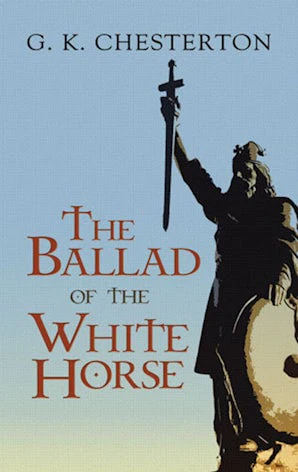
More than a thousand years ago, the ruler of a beleaguered kingdom saw a vision of the Virgin Mary that moved him to rally his chiefs and make a last stand. Alfred the Great freed his realm from Danish invaders in the year 878 with an against-all-odds triumph at the Battle of Ethandune. In this ballad, G. K. Chesterton equates Alfred's struggles with Christianity's fight against nihilism and heathenism—a battle that continues to this day.
One of the last great epic poems, this tale unfolds in the Vale of the White Horse, where Alfred fought the Danes in a valley beneath an ancient equine figure etched upon the Berkshire hills. Chesterton employs the mysterious image as a symbol of the traditions that preserve humanity. His allegory of the power of faith in the face of an invasive foe was much quoted in the dark days of 1940, when Britain was under attack by Nazis. This new edition offers an authoritative, inexpensive version of Chesterton's inspiring work.
One of the last great epic poems, this tale unfolds in the Vale of the White Horse, where Alfred fought the Danes in a valley beneath an ancient equine figure etched upon the Berkshire hills. Chesterton employs the mysterious image as a symbol of the traditions that preserve humanity. His allegory of the power of faith in the face of an invasive foe was much quoted in the dark days of 1940, when Britain was under attack by Nazis. This new edition offers an authoritative, inexpensive version of Chesterton's inspiring work.
Reprint of the John Lane Company, New York, 1911 edition.
ancient times;anglosaxon kingdom;wessex;visions;prophecy;virgin mary;catholicism;alfred the great;danish invaders in the year 878;against all odds triumph;battle of ethandune;ballad;christianity;fight against nihilism;fight against heathenism;epic poem;vale of the white horse;berkshire hills;mysterious image;tradition;allegory for contemporary christianity;power of faith;ancient battles;great heathen army;guthrum;basis for treaty of wedmore;battle of edington; Dover Poetry; Alfred the Great; Chesterton; epic poetry; Battle of EthanduneDescription
More than a thousand years ago, the ruler of a beleaguered kingdom saw a vision of the Virgin Mary that moved him to rally his chiefs and make a last stand. Alfred the Great freed his realm from Danish invaders in the year 878 with an against-all-odds triumph at the Battle of Ethandune. In this ballad, G. K. Chesterton equates Alfred's struggles with Christianity's fight against nihilism and heathenism—a battle that continues to this day.
One of the last great epic poems, this tale unfolds in the Vale of the White Horse, where Alfred fought the Danes in a valley beneath an ancient equine figure etched upon the Berkshire hills. Chesterton employs the mysterious image as a symbol of the traditions that preserve humanity. His allegory of the power of faith in the face of an invasive foe was much quoted in the dark days of 1940, when Britain was under attack by Nazis. This new edition offers an authoritative, inexpensive version of Chesterton's inspiring work.
One of the last great epic poems, this tale unfolds in the Vale of the White Horse, where Alfred fought the Danes in a valley beneath an ancient equine figure etched upon the Berkshire hills. Chesterton employs the mysterious image as a symbol of the traditions that preserve humanity. His allegory of the power of faith in the face of an invasive foe was much quoted in the dark days of 1940, when Britain was under attack by Nazis. This new edition offers an authoritative, inexpensive version of Chesterton's inspiring work.
Reprint of the John Lane Company, New York, 1911 edition.
ancient times;anglosaxon kingdom;wessex;visions;prophecy;virgin mary;catholicism;alfred the great;danish invaders in the year 878;against all odds triumph;battle of ethandune;ballad;christianity;fight against nihilism;fight against heathenism;epic poem;vale of the white horse;berkshire hills;mysterious image;tradition;allegory for contemporary christianity;power of faith;ancient battles;great heathen army;guthrum;basis for treaty of wedmore;battle of edington; Dover Poetry; Alfred the Great; Chesterton; epic poetry; Battle of Ethandune


