✨ New Arrivals Just Dropped!Explore
$5.23
Original: $14.95
-65%An Economic Interpretation of the Constitution of the United States—
$14.95
$5.23The Story
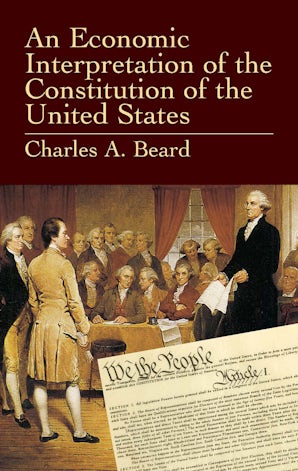
In this famous study, the author turned the hagiography of many earlier American historians on its head. Unlike those writers, who had stressed idealistic impulses as factors determining the structure of the American government, Beard questioned the Founding Fathers' motivations in drafting the Constitution and viewed the results as a product of economic self-interest.
Brimming with human interest, insights, and information every student of American history will prize, this volume — one of the most controversial books of its time — continues to prompt new perceptions of the supreme law of the land.
"A staple for history and economics collections." — Library Journal.
"Replete with human interest and compact with information of importance to every student of American history or of political science." — Annals of the American Academy of Political and Social Science.
Brimming with human interest, insights, and information every student of American history will prize, this volume — one of the most controversial books of its time — continues to prompt new perceptions of the supreme law of the land.
"A staple for history and economics collections." — Library Journal.
"Replete with human interest and compact with information of importance to every student of American history or of political science." — Annals of the American Academy of Political and Social Science.
Reprint of The MacMillan Company, New York, 1913.
Description
In this famous study, the author turned the hagiography of many earlier American historians on its head. Unlike those writers, who had stressed idealistic impulses as factors determining the structure of the American government, Beard questioned the Founding Fathers' motivations in drafting the Constitution and viewed the results as a product of economic self-interest.
Brimming with human interest, insights, and information every student of American history will prize, this volume — one of the most controversial books of its time — continues to prompt new perceptions of the supreme law of the land.
"A staple for history and economics collections." — Library Journal.
"Replete with human interest and compact with information of importance to every student of American history or of political science." — Annals of the American Academy of Political and Social Science.
Brimming with human interest, insights, and information every student of American history will prize, this volume — one of the most controversial books of its time — continues to prompt new perceptions of the supreme law of the land.
"A staple for history and economics collections." — Library Journal.
"Replete with human interest and compact with information of importance to every student of American history or of political science." — Annals of the American Academy of Political and Social Science.
Reprint of The MacMillan Company, New York, 1913.


