✨ New Arrivals Just Dropped!Explore
$24.95
Critique of Pure Reason—
$24.95
The Story
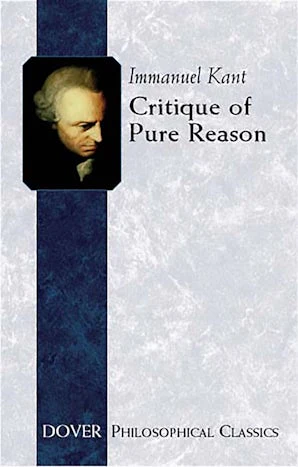
In his monumental Critique of Pure Reason, German philosopher Immanuel Kant (1724–1804) argues that human knowledge is limited by the capacity for perception. He attempts a logical designation of two varieties of knowledge: a posteriori, the knowledge acquired through experience; and a priori, knowledge not derived through experience. Kant maintains that the most practical forms of human knowledge employ the a priori judgments that are possible only when the mind determines the conditions of its own experience. This accurate translation by J. M. Meiklejohn offers a simple and direct rendering of Kant's work that is suitable for readers at all levels.
Reprint of the The Colonial Press, New York and London, 1900 edition.
Description
In his monumental Critique of Pure Reason, German philosopher Immanuel Kant (1724–1804) argues that human knowledge is limited by the capacity for perception. He attempts a logical designation of two varieties of knowledge: a posteriori, the knowledge acquired through experience; and a priori, knowledge not derived through experience. Kant maintains that the most practical forms of human knowledge employ the a priori judgments that are possible only when the mind determines the conditions of its own experience. This accurate translation by J. M. Meiklejohn offers a simple and direct rendering of Kant's work that is suitable for readers at all levels.
Reprint of the The Colonial Press, New York and London, 1900 edition.


